

WHEN TIME SLIPS AWAY
The Most Valuable Wealth of All

Almost two thousand years ago, while Rome was experiencing one of the most prosperous periods in its history, a philosopher observed a contradiction that he found difficult to understand. He saw people carefully protecting their property, defending their financial interests, and safeguarding anything they considered valuable. Yet those same individuals seemed remarkably careless with what was truly their most valuable asset. They allowed others to occupy their days, determine their priorities, and shape a significant part of their existence. That philosopher was Seneca, and the conclusion he reached remains uncomfortable even today. People behaved as if time were abundant when, in reality, it was the only resource that can never be recovered.
The observation remains relevant after two thousand years of scientific and technological progress. We are surrounded by tools designed to save time. We can communicate instantly with almost anyone in the world, access enormous amounts of information in seconds, and automate tasks that once required hours of work. Never before have we had so many resources available to help us become more efficient. Yet one of the most common phrases heard in personal and professional conversations remains exactly the same: “I don’t have time.” The paradox is obvious. The more we try to optimize our time, the scarcer it seems to become.
In his work De Brevitate Vitae, Seneca defended an idea that remains profoundly relevant. Life is not necessarily short. What happens is that a significant portion of it is wasted. Not because people are incapable or irresponsible, but because they rarely stop to examine where they are truly investing their existence. We often confuse activity with progress, busyness with meaning, and movement with direction. We fill our days with tasks, meetings, and commitments, yet rarely ask ourselves whether all that effort is actually bringing us closer to what we consider important.
Decades later, Marcus Aurelius would reach a similar conclusion from the very center of power. While governing one of the largest empires in history, he understood that the real problem was not a lack of time but the distractions and concerns that occupy the space reserved for what truly matters. The challenge was not to obtain more time but to make better use of the time already available.
This reflection remains extraordinarily relevant because much of contemporary anxiety seems to arise from precisely this issue. Writer Oliver Burkeman argues that we are trapped by an impossible expectation: the belief that one day we will manage to do everything. We imagine a future in which we answer every message, seize every opportunity, complete every project, read every book on our list, and keep every possible option open. Yet human reality works in exactly the opposite way. Living means choosing. Every yes contains multiple noes. Every path we follow leaves countless others unexplored.
Maturity does not consist of endlessly expanding our options. It consists of deciding which options deserve a limited portion of our lives. This idea is uncomfortable because it forces us to accept something we often prefer to ignore. We cannot do everything. We cannot be everywhere. We cannot become every possible version of ourselves. Every human life is necessarily incomplete. Every choice opens some doors and closes others.
Economists use a particularly useful expression to describe this reality: opportunity cost. Every time we choose one option, we simultaneously give up others. We usually apply this concept to money, investments, or business decisions, but it becomes even more relevant when we talk about time. A poor investment can be recovered. A failed project can be redesigned. Even a major financial loss can eventually be compensated. A lost hour, however, never returns. Every decision about time is also a decision about how we use an irreplaceable portion of our existence.
There is another aspect that often goes unnoticed. Time and attention are inseparable. At the end of the nineteenth century, William James understood something remarkably simple. Our experience of the world depends largely on what we pay attention to. Two people can live through very similar circumstances and build completely different lives because they focus their attention on different elements of reality. What we observe ultimately shapes what we learn, remember, and value. What occupies our attention eventually occupies our lives.
This principle has become extraordinarily important in today’s world. Never before have so many organizations competed simultaneously for human attention. Social media platforms, digital services, news outlets, applications, and algorithmic systems constantly compete for seconds, minutes, and hours of our lives. The problem is no longer a shortage of information. The problem is abundance. We live surrounded by stimuli specifically designed to capture our attention and keep us engaged for as long as possible.
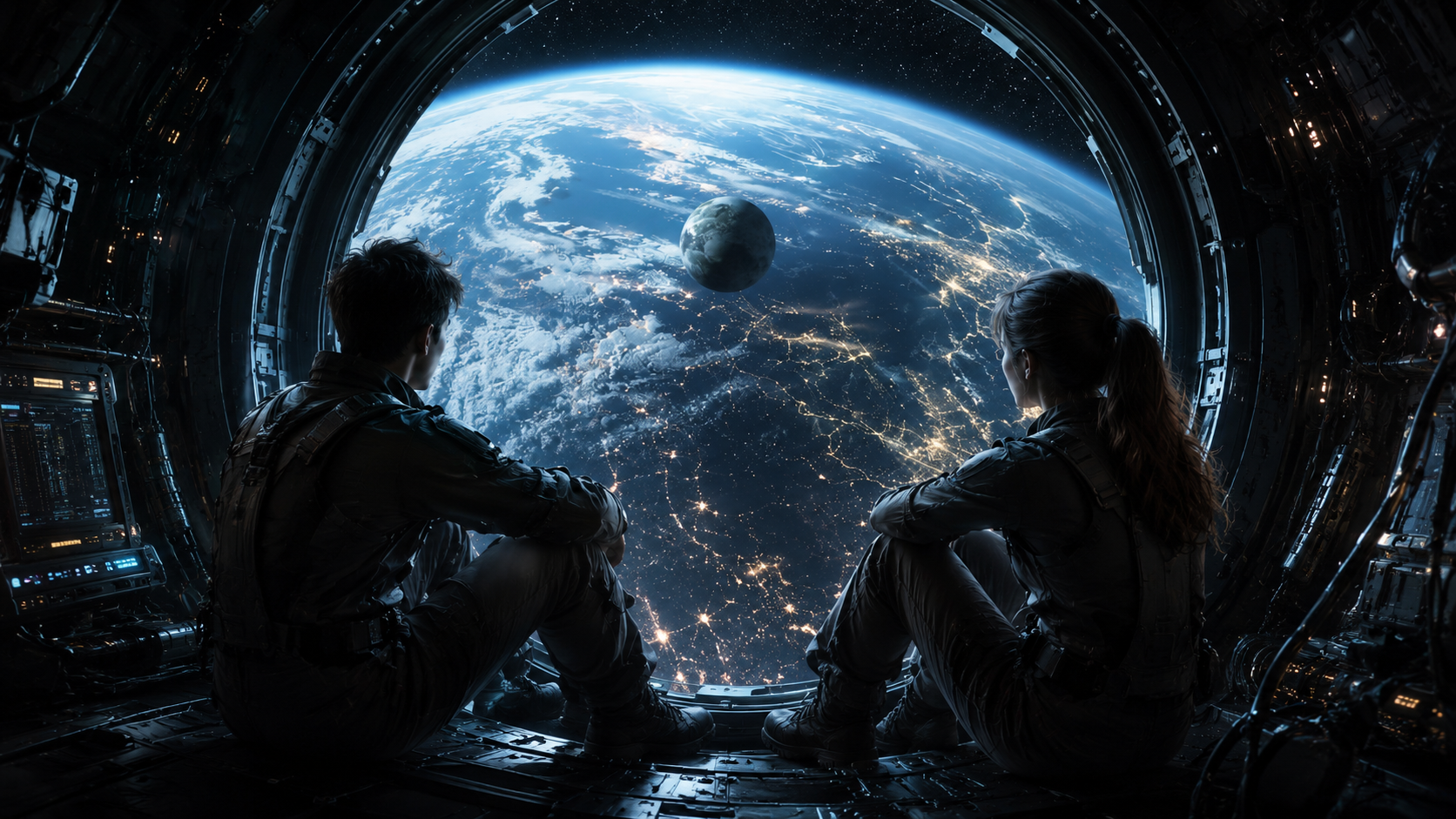
Perhaps that is why time has become a recurring theme in science fiction. For more than a century, writers and filmmakers have imagined technologies capable of altering our relationship with it. The fascination is understandable. If time is our most valuable resource, it seems natural to dream about expanding it, controlling it, or even mastering it. Yet the most interesting stories are rarely about the technology itself. They are about the human consequences that emerge once such technology exists.
In The Time Machine, In Time, and Edge of Tomorrow, we find different versions of the same question. What would happen if we could travel through time, buy it, or repeat it indefinitely? Yet all of these stories ultimately arrive at a similar conclusion. Even when we change the rules of time, we still face the same human challenge: deciding what deserves our attention. Technology may alter duration, but it cannot determine our priorities for us.
This reflection connects directly with the work of German sociologist Hartmut Rosa. According to Rosa, one of the defining characteristics of modernity is permanent acceleration. Everything seems to happen faster. Information moves more quickly, innovations arrive more frequently, and expectations continue to grow. Paradoxically, many of the advances designed to save time end up creating the opposite feeling. The faster the world moves, the less time we seem to have available to actually live in it.Byung-Chul Han adds that this dynamic is often accompanied by a constant pressure to perform. We push ourselves to produce more, respond faster, and make use of every available minute. The result is rarely a more fulfilling life. More often, it creates a permanent sense of urgency and exhaustion.
That is why Cal Newport’s proposal is particularly relevant. In a culture built around constant interruption, the ability to focus for extended periods on what truly matters has become an extraordinarily rare skill. Protecting attention is no longer simply a matter of productivity. It is a way of protecting life itself. Every minute of conscious attention represents a decision about what deserves a place in our time.
This idea is captured beautifully in an observation by Annie Dillard. She wrote that the way we spend our days ultimately becomes the way we spend our lives. The statement is powerful because it shifts our attention away from grand ambitions and toward everyday decisions. It is not abstract dreams that build a life. It is habits, priorities, and choices repeated day after day.
Eventually, we return to Seneca. After centuries of scientific progress, technological revolutions, and social transformation, his observation retains remarkable force. Time remains the only truly irrecoverable form of wealth. Lost money can be earned again. A damaged reputation can be rebuilt. Many mistakes can be corrected. Time that has been spent disappears forever.
That is why organizing our time is not about doing more things. It is about making better decisions. It means recognizing that every commitment occupies a limited portion of our existence, that every prolonged distraction carries an invisible cost, and that every day represents a unique opportunity to move closer to—or further away from—what truly matters to us. Our inner compass cannot decide for us how to use our time, but it can remind us of an essential truth. Life is happening right now, in whatever we are giving our attention, energy, and days to. Because in the end, time is not something we possess. It is the irrecoverable wealth from which our lives are made.