At just twelve years old, a girl walked the cliffs of Lyme Regis, on the south coast of England, when she found embedded in the rock the fossilized skull of a creature that had remained hidden for millions of years. That find would change the history of palaeontology, but what was truly extraordinary was not the discovery itself, but everything that followed. For decades, Mary Anning returned repeatedly to those same cliffs, enduring the cold, the rain, and the constant danger of landslides. She was not driven by the hope of recognition—which barely arrived during her lifetime—but by a much deeper need: the drive to keep searching. Where others only saw rocks, she found questions. She understood very early on that great discoveries rarely happen by accident; they are the result of returning one more time to the places where most people have already stopped looking.
We often imagine passion as a single instant of inspiration, a sudden revelation that transforms our lives from one day to the next. We hope to discover that one thing for which we were born and that, from that moment on, everything will become evident and clear. However, experience usually shows a very different path. Passion rarely appears fully formed. It begins as an almost imperceptible spark and grows slowly as we dedicate time, attention, and effort to it. More than a passing emotion, it is an energy that guides our attention and drives us to return repeatedly to that which awakens our desire to understand.
Throughout history, different cultures have tried to explain where that force capable of sustaining an entire life dedicated to the same search originates. The ancient Greeks turned to an extraordinarily powerful image: fire. Hephaestus, the god of the forge and of craftsmen, transformed metal through heat, patience, and repetition. His greatness did not reside in a single moment of inspiration, but in returning every day to the same work until he transformed shapeless metal into something extraordinary. Passion works in much the same way. It does not avoid effort or eliminate difficulties; instead, it gives them meaning. Just as fire slowly transforms metal, passion slowly transforms the person who chooses to nurture it. There are fires that illuminate for an instant and then disappear; passion, by contrast, endures because it finds a reason to keep burning every day.
For a long time, it was thought that this force was simply an intense emotion or a personality trait difficult to explain. However, contemporary psychology has begun to understand it with much greater precision. One of the researchers who has contributed most to this field has been Robert J. Vallerand, whose work distinguishes between harmonious passion, which expands our freedom, and obsessive passion, which ends up limiting it. Understanding this difference is fundamental because it challenges one of the great myths of success. People who keep a passion alive for decades usually do not do so because they are dominated by it, but because they have learned to integrate it into their lives. Mature passion does not consume the person; it transforms them.
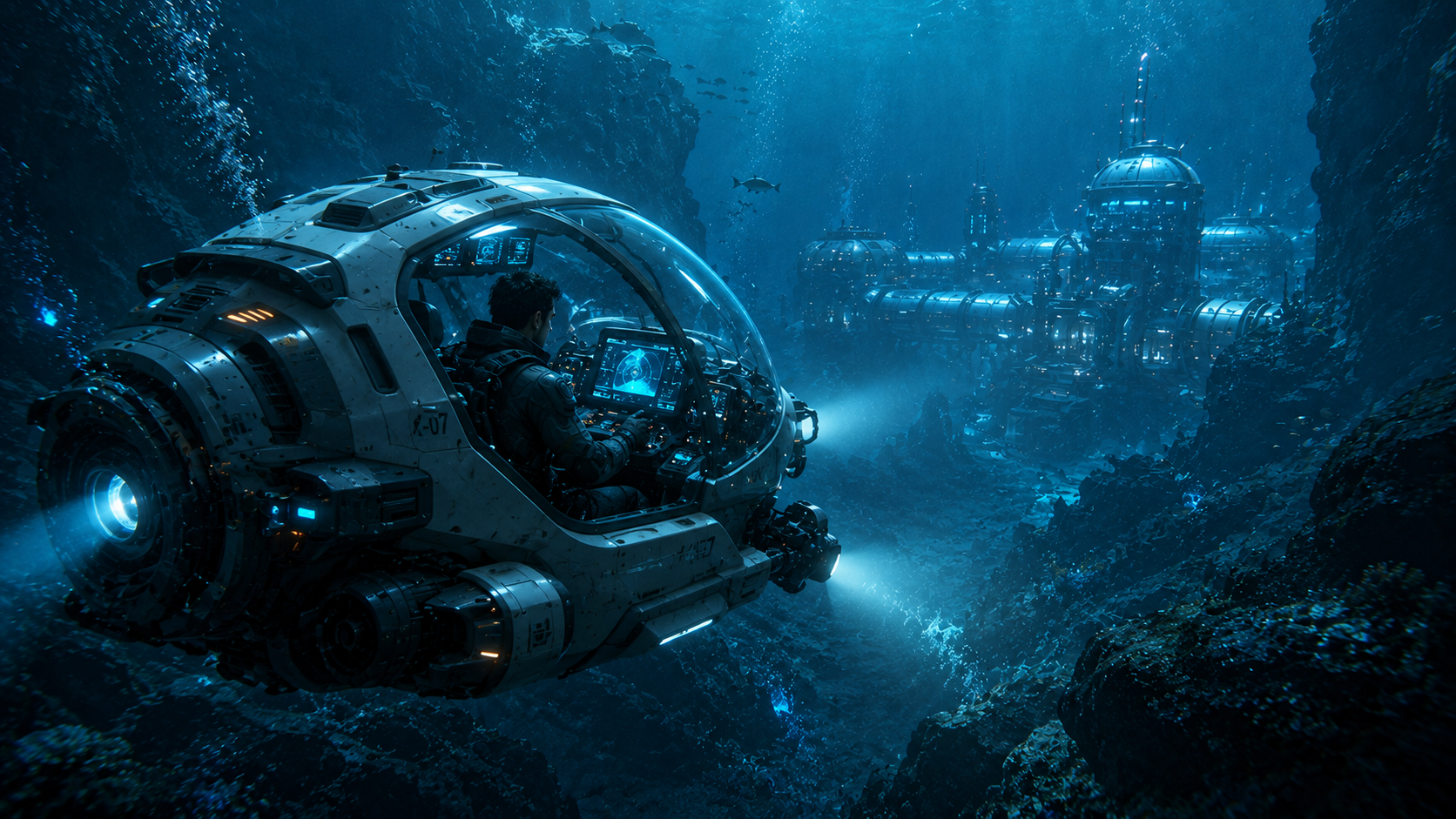
Perhaps that is why science fiction has returned to this same theme. Behind spaceships, artificial intelligences, and distant worlds lies a deeply human question: what drives someone to dedicate an entire life to understanding the unknown? Ellie Arroway, in Contact, listens for years to an apparently silent universe because she cannot stop searching. The monks of A Canticle for Leibowitz preserve knowledge for generations without even knowing whether anyone will ever need it. And the scientists in Rendezvous with Rama explore a gigantic alien spacecraft driven by a need as old as Mary Anning herself: to understand. In all these stories, the true protagonist is never the technology; it is the passion for discovery.
Understanding the nature of passion was only the first step. The next question is even more interesting: why do some people manage to keep that fire alive throughout their lives while others lose it after just a few months? The research of Edward L. Deci and Richard M. Ryan offers a convincing answer. Both demonstrated that the deepest motivation does not come from external rewards, but from a genuine interest in the activity itself. When we freely choose a path, perceive that we are progressing through learning, and feel that what we do creates value beyond ourselves, an extraordinarily stable source of energy emerges.The activity then ceases to be merely a means of achieving a goal and becomes a reward.
Without realizing it, Mary Anning embodied precisely those conditions. No one told her where to look. Each fossil expanded her knowledge, and each discovery contributed to reconstructing the history of our planet. Her true reward was not the isolated discovery, but understanding a little more about a world that almost no one else was yet capable of interpreting. Passion no longer depended on the excitement of the beginning but instead rested on something much more enduring: the joy of continuing to learn.Perhaps that is why people who keep a passion alive for decades are not necessarily the most brilliant, but those who never stop seeing themselves as lifelong learners.
This idea also helps explain why so many people abandon projects they began with enormous enthusiasm. They expect motivation to remain as intense as it was on the first day and, when that initial excitement inevitably fades, they conclude they have chosen the wrong path. However, mature passion works differently. Enthusiasm gives way to commitment, curiosity becomes a habit, and learning gradually replaces novelty. What changes is not the direction of the journey, but the way we travel it.