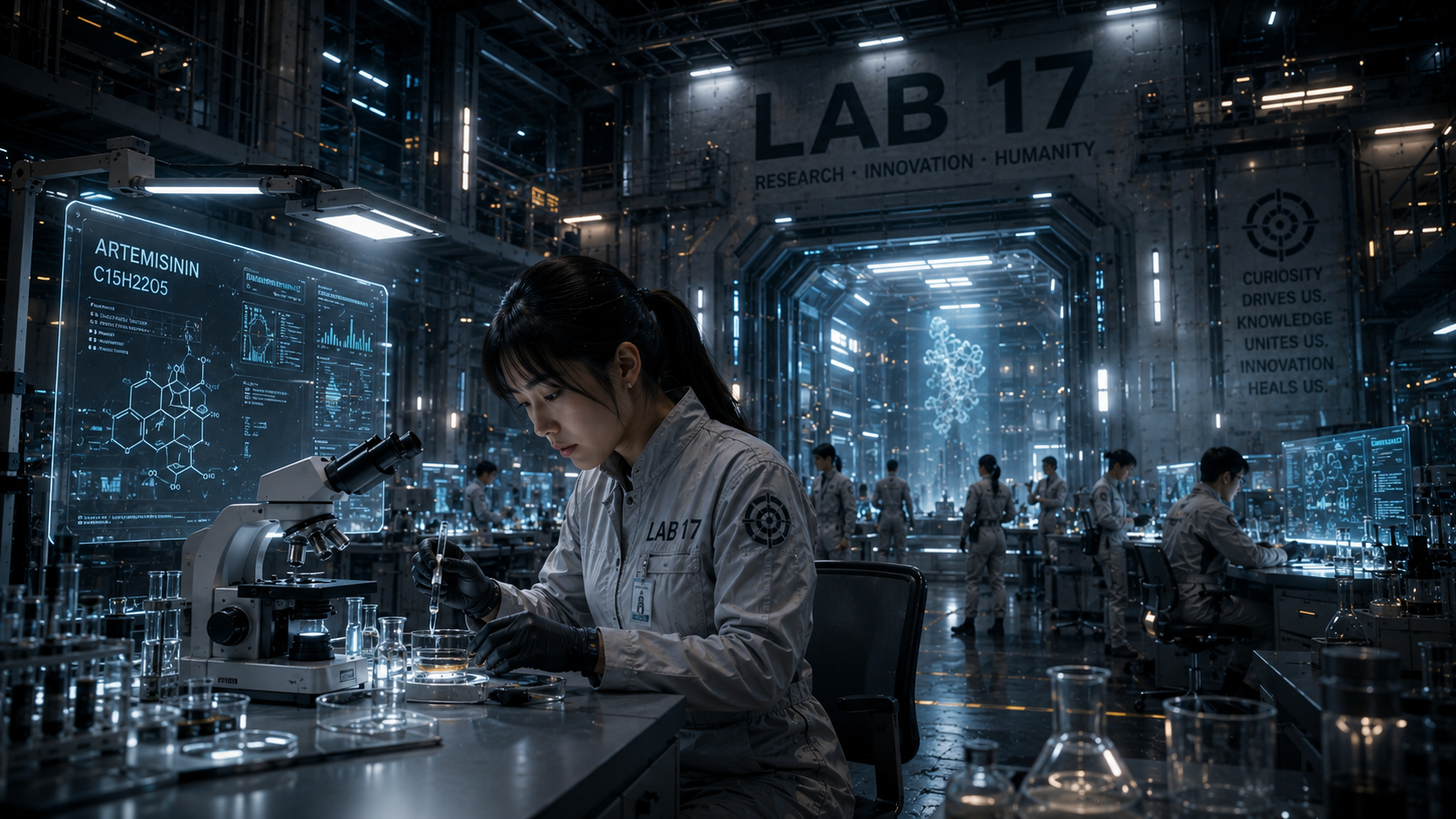
In 1969, the Chinese pharmacologist Tu Youyou was given a mission that seemed almost impossible: to find an effective treatment for malaria. Existing medicines were losing their effectiveness, and millions of people remained exposed to a disease that had accompanied humanity for centuries. After studying hundreds of medicinal plants and accumulating countless unsuccessful experiments, she made an unexpected decision. Instead of continuing to search only in the most advanced laboratories, she turned her attention to the past.
While reviewing ancient manuscripts, she found a brief reference written by the physician Ge Hong in the fourth century. Only a few lines described how to prepare an infusion of Artemisia annua using low temperatures. For more than sixteen hundred years, that knowledge had remained almost forgotten. Yet Tu realized that it contained a crucial clue. Until then, extractions had been carried out using high heat, destroying precisely the active compound researchers were trying to isolate. The problem had never been the plant. The problem was the way people were reading the knowledge it contained. When she changed the extraction method, artemisinin emerged, becoming one of the most important medical discoveries of the last century.
History often presents innovation as a succession of revolutionary inventions, futuristic laboratories, and technologies that change the world overnight. However, Tu Youyou’s journey tells a very different story. Innovation does not always consist of creating something new; very often it consists of discovering a connection that has been waiting for centuries to be understood.The answer had always been there. What was extraordinary was that someone finally learned to interpret it in a different way.
That was precisely the idea that inspired economist Joseph Schumpeter when he argued that great innovations arise from new combinations. They rarely emerge from nothing. Instead, they appear when someone connects knowledge, resources, or experiences that had previously remained separate. Years later, Peter Drucker expanded that vision by explaining that innovation is not an act of inspiration reserved for a few geniuses, but a discipline based on observation, curiosity, and the ability to recognize opportunities where others see only routine. From that perspective, Tu Youyou did not discover an unknown plant or invent a new molecule. She built a bridge between traditional knowledge and modern science, proving that the most valuable answers can often be found where almost nobody chooses to look.
Decades later, biochemist Katalin Karikó would follow a remarkably similar path. For years, she defended the potential of messenger RNA while most of the scientific community considered that line of research unpromising. She lost funding, academic positions, and professional recognition, yet she continued refining her work until her research made possible some of the most important vaccines of the twenty-first century. Her story reminds us that the greatest innovations often seem insignificant before they change the world, and that perseverance is just as important as creativity.
Interestingly, this way of understanding innovation has also been explored for decades by some of the finest works of science fiction. Not as a celebration of technology, but as a reflection on the limits of our own understanding.
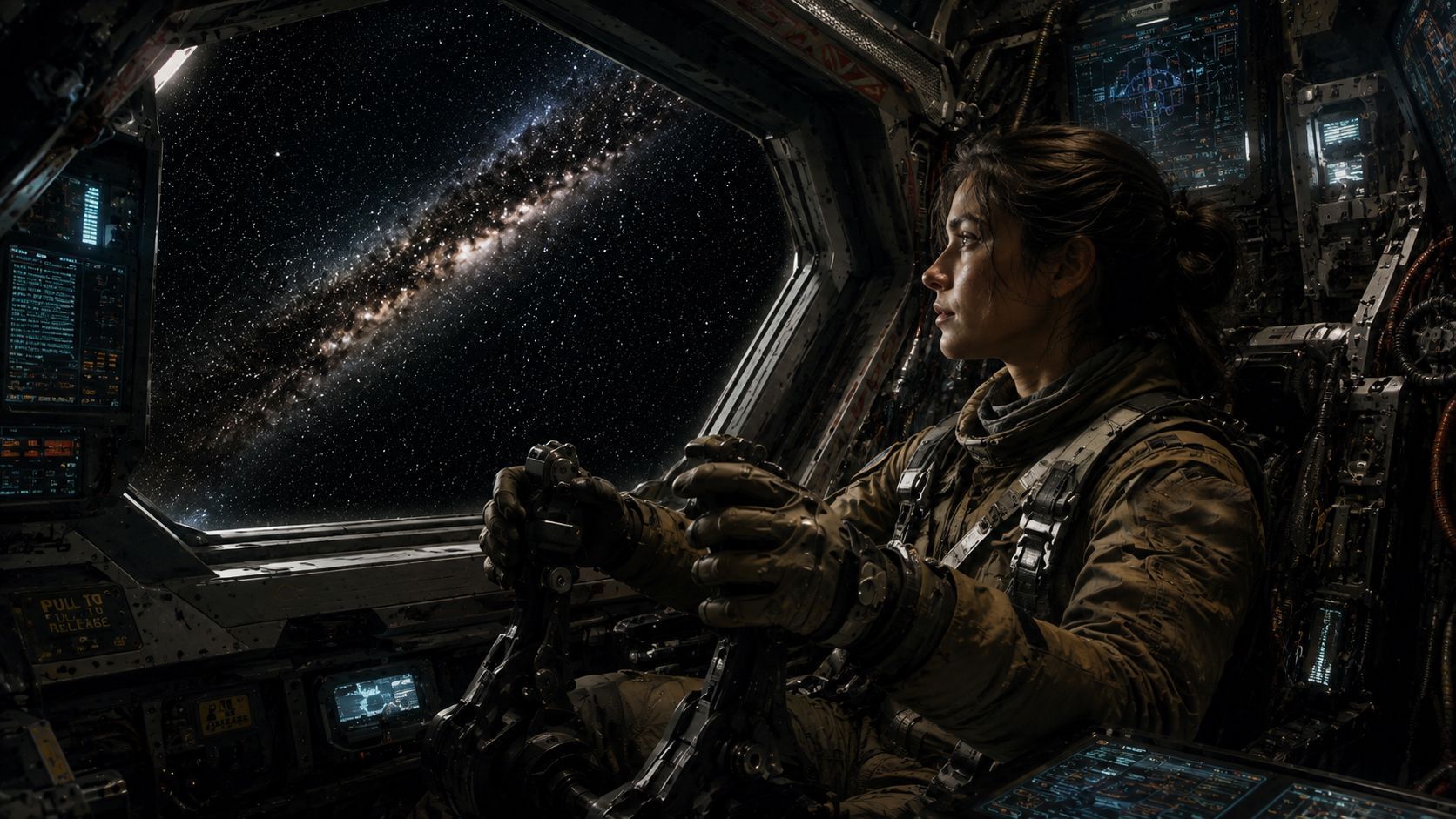
In His Master’s Voice, Stanisław Lem imagines humanity receiving a mysterious message from deep space. The world’s greatest scientists spend years trying to decipher it using the most sophisticated tools ever built. Yet the greatest obstacle is never technological. The message is there from the very beginning. What is missing is the mental framework required to interpret it.Lem proposes a fascinating idea: perhaps some answers remain invisible not because they are hidden, but because we have not yet learned the language in which they were written.
Decades later, Peter Watts took that reflection even further in Blindsight. During humanity’s first contact with an extraterrestrial intelligence, the protagonists discover that it is possible to encounter a form of intelligence so radically different that it processes information in ways that challenge every human intuition. The novel questions one of our deepest assumptions: having more information does not guarantee a better understanding of reality. We can accumulate data for years and still remain incapable of recognizing what is right in front of us.
Tu Youyou’s story seems to answer, through science, the questions that Lem and Watts explored through fiction. For centuries, the knowledge had always been available. Artemisia annua had always grown in nature, and ancient medical texts had already described its use. Innovation did not appear when something new was discovered, but when someone learned to interpret something that had always existed in a different way. That seemingly subtle distinction completely changes the way we understand progress.
Today we are surrounded by information, artificial intelligence, vast databases, and accumulated knowledge as never before in history. It is tempting to believe that innovation simply means generating more information or developing increasingly sophisticated technologies. Yet the real challenge may be something entirely different. Learning to create connections that nobody has seen before. That is precisely why Henry Chesbrough argued that open innovation will become increasingly important: the best ideas rarely emerge from a single discipline, a single organization, or a single way of thinking. Their true potential appears when different forms of knowledge come together and produce something that none of them could have created alone.
Perhaps that is the greatest lesson shared by a Chinese scientist from the twentieth century, a persistent researcher like Katalin Karikó, and two of the deepest novels in modern science fiction. Knowledge has been growing around us for centuries. Finding it is not the difficult part. The real challenge is learning to recognize it when it appears.
Because innovation rarely begins with a discovery. It usually begins with a new way of reading reality.