

THE 37 KAMON
The Complete Map of Koji Neon
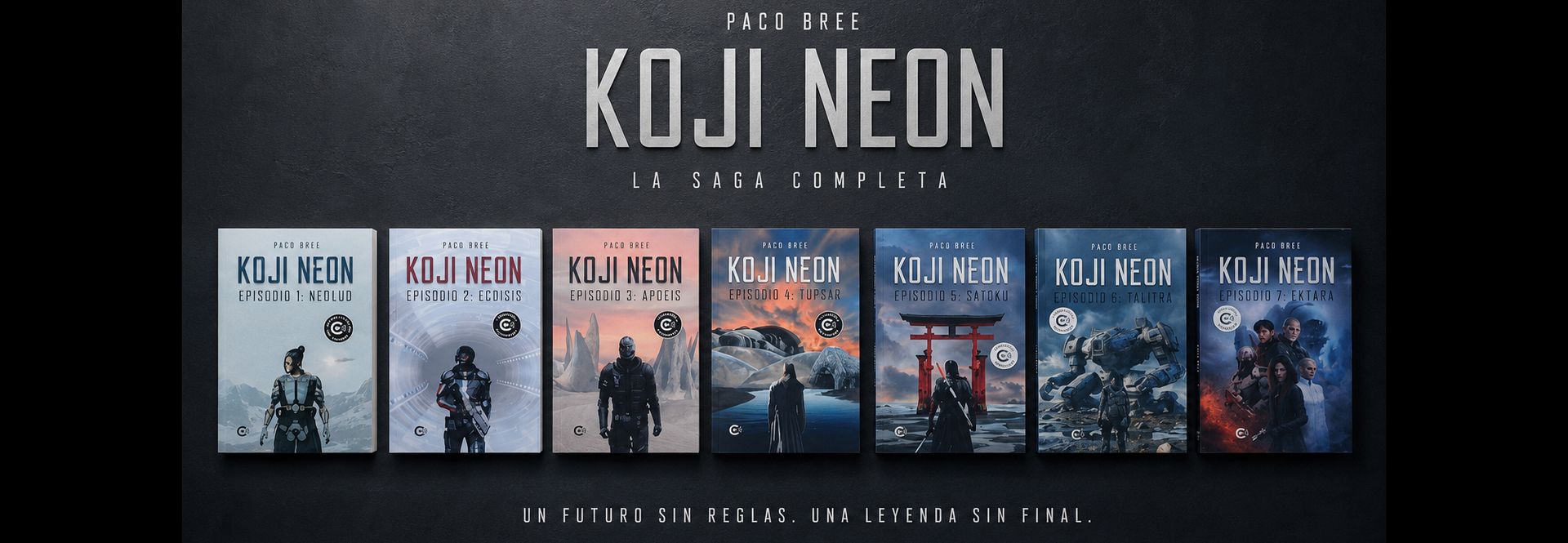
A few days ago, I published Ektara, the seventh episode of Koji Neon. Following its release, several people asked me a question I had never fully answered before: how many books will this story ultimately contain? The short answer is twenty-seven. The long answer is thirty-seven. And that difference of ten books explains better than anything else what Koji Neon really is.
For years, most people who have followed this universe have only seen its visible side. They have seen novels, characters, illustrations, literary awards, interviews, conferences, and a community that continues to grow. They have seen a science fiction and cyberpunk saga influenced by authors such as Philip K. Dick, Isaac Asimov, and Frank Herbert, alongside visual inspirations ranging from Blade Runner to Ghost in the Shell. All of that is true. Yet it is also incomplete. What very few people know is that Koji Neon was conceived from the very beginning as something more ambitious than a collection of novels. Its purpose was to explore some of the most important questions of our time: what does it mean to remain human in an age shaped by technology, how will our societies evolve, what role will artificial intelligence and biotechnology play in the decades ahead, and to what extent will our technical capabilities grow faster than our wisdom?
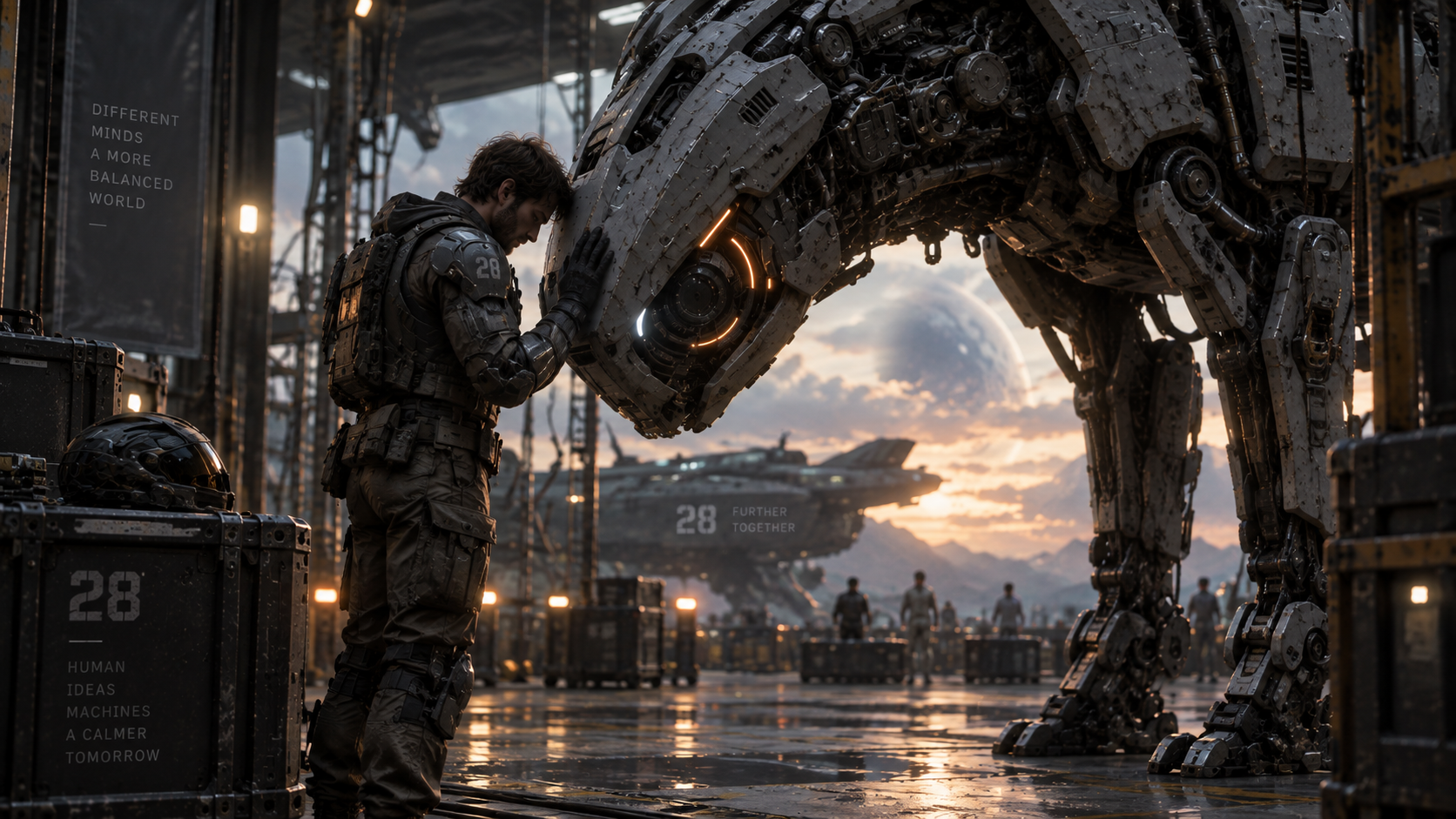
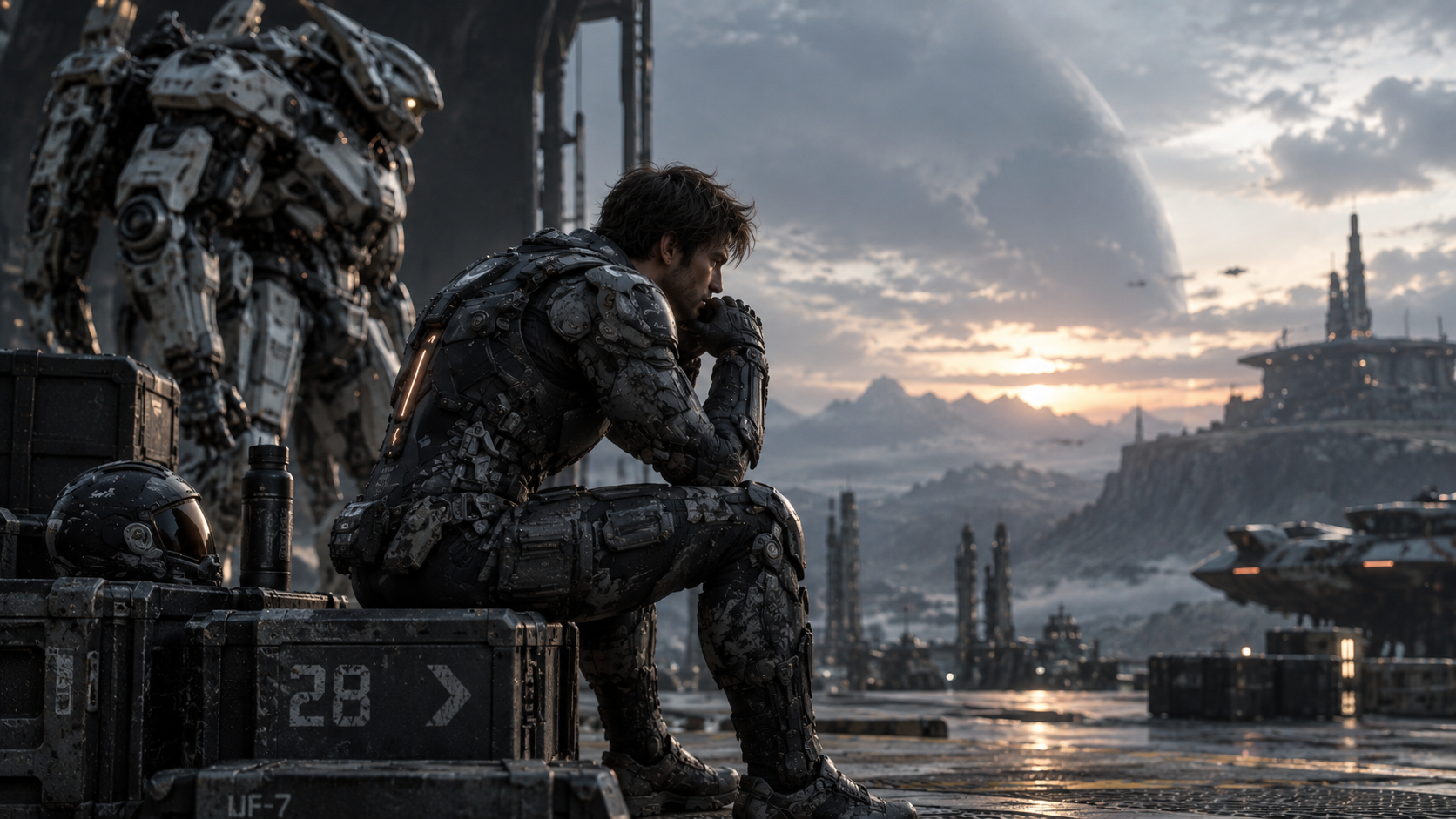
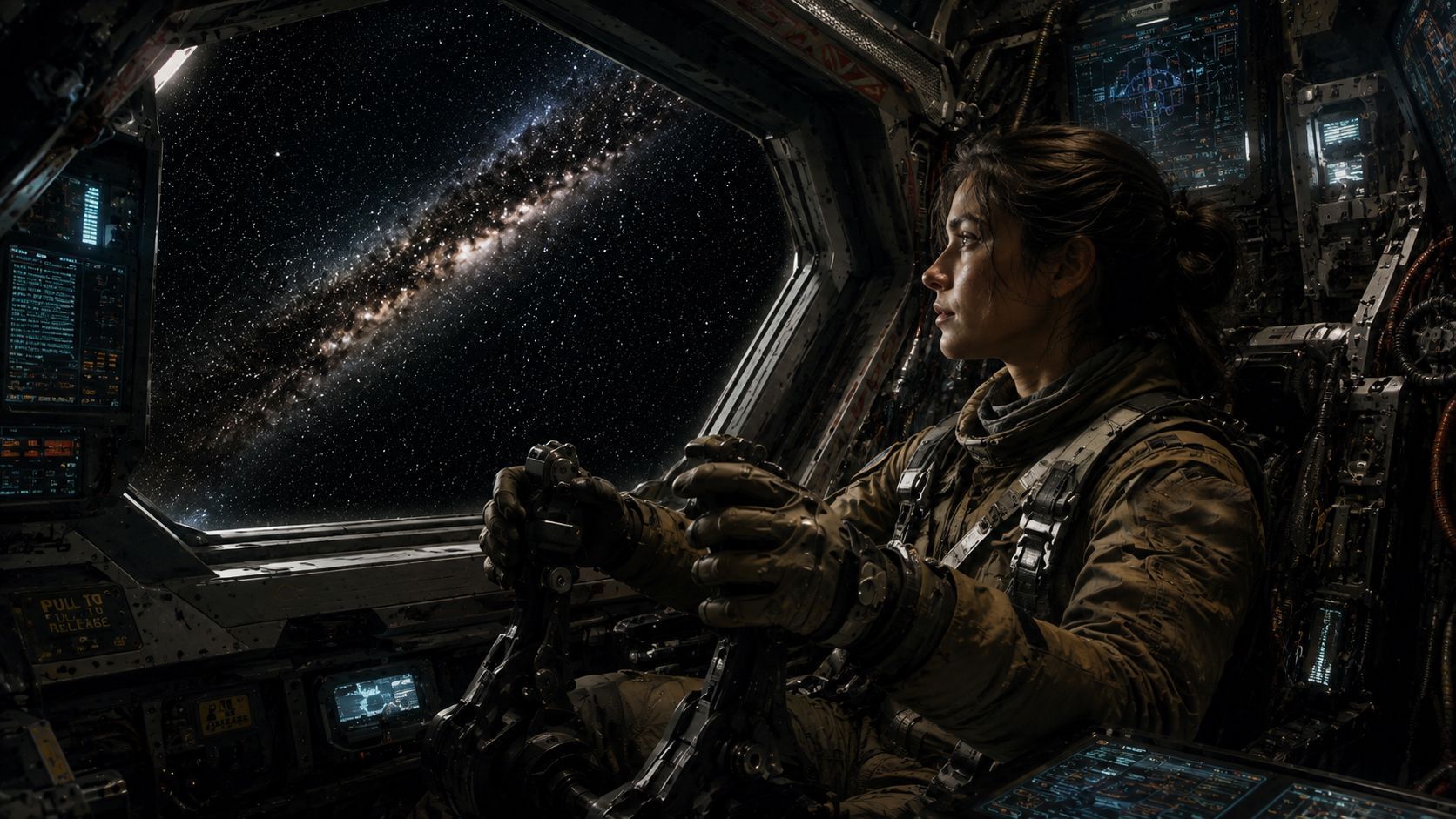
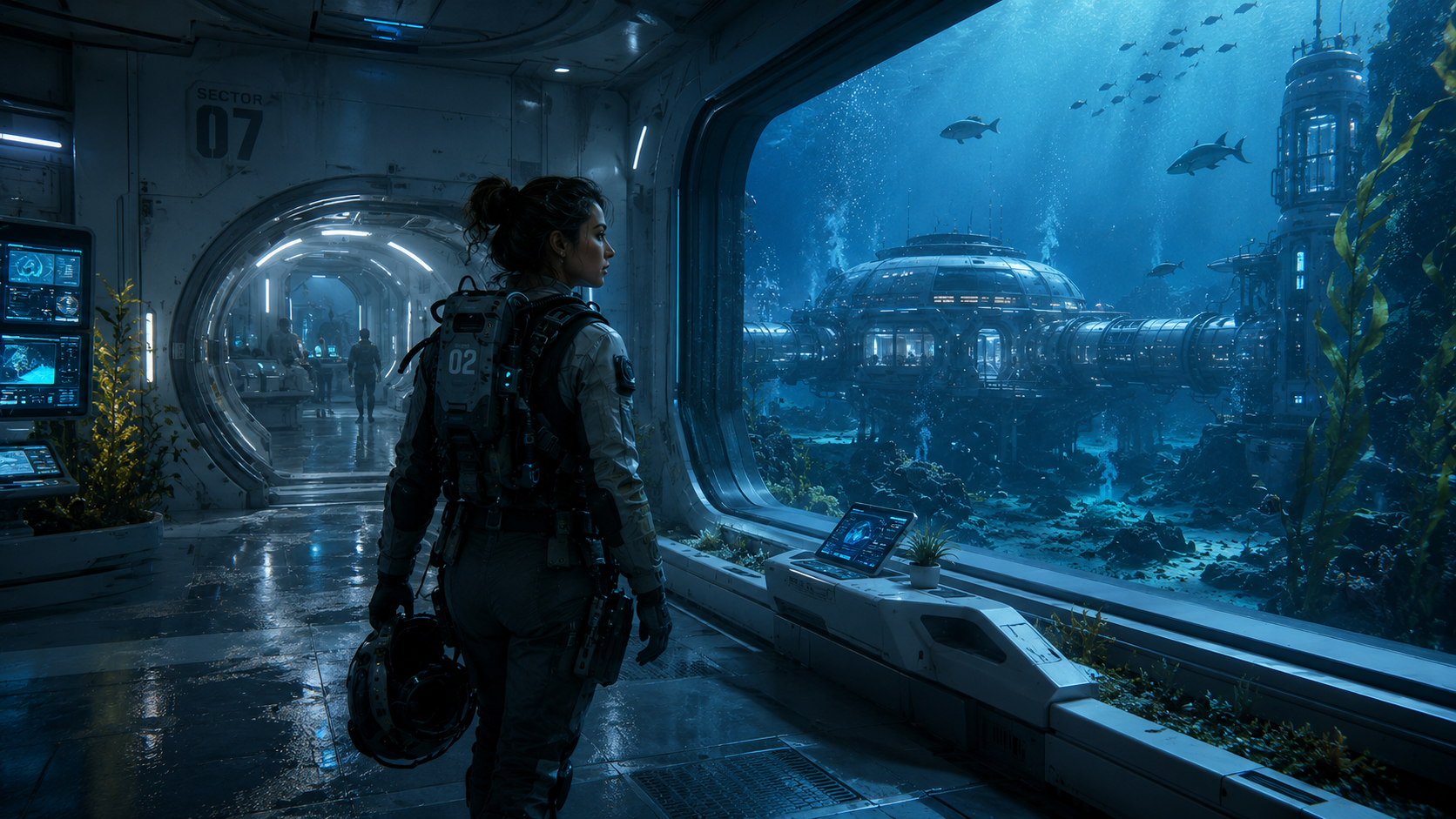
The image accompanying this publication represents that complete map. I call it The 37 Kamon. I deliberately chose the word Kamon because I have always been fascinated by Japanese culture and by its ability to condense identity, history, and legacy into a single symbol. For centuries, Kamon were used by families and clans to represent who they were, where they came from, and what values they stood for. In some ways, they are similar to Western coats of arms, but with a visual and conceptual elegance that I have always found particularly inspiring.
Japanese influence has been present in Koji Neon from the very beginning. Like many people of my generation, I grew up watching anime, reading manga, and discovering different ways of telling stories. Among those characters was Koji Kabuto, the protagonist of Mazinger Z, one of the first heroes who sparked my fascination with science fiction and possible futures. Over time, those early influences blended with others drawn from philosophy, innovation, psychology, history, spirituality, and the study of emerging technologies. The result was Koji Neon.
It is also no coincidence that the katana appears repeatedly throughout the saga. Beyond its aesthetic dimension, it represents an idea that runs through the entire project. Technology can amplify our capabilities, but it remains a tool. What truly matters is not the power of the tool, but the responsibility of the person who wields it. This tension between technological capability and human consciousness lies at the heart of many of Koji Neon’s conflicts and connects directly with the questions that have accompanied me throughout my work in innovation and future studies.
When I began designing this universe, I knew I did not want to write a series of independent novels. I wanted to build a narrative system capable of evolving over decades. That is why the central structure consists of 27 episodes organized into three major cycles, each focused on a different stage in the evolution of human civilization.
The first cycle is called The Three Storms. It is the cycle readers know today. It begins in a world that is still recognizable, although increasingly shaped by technological advances, geopolitical tensions, and profound cultural transformations. Gradually, anomalies begin to emerge that seem unrelated to one another: prophetic dreams, hidden organizations, increasingly sophisticated artificial intelligences, and technologies capable of altering human nature itself. All of these threads eventually converge into three extraordinary events that transform the planet forever. It is the cycle of discovery, preparation, and collapse. The seven episodes published so far belong to this first stage of the story.
The second cycle is called The Underground Silence. Generations have passed since the Three Storms. Humanity survives beneath the surface, fragmented into communities that have developed their own cultures, beliefs, and power structures. The world above has become a legend preserved through incomplete stories and fading memories. In this new landscape, seven leaders and seven advisors emerge, competing to determine the future of the underground worlds. The central question is no longer survival alone, but deciding which model of civilization deserves to endure and what price humanity is willing to pay for it.
The third cycle is titled The Green Awakening. After decades of isolation, the gates reopen. What the survivors find is not a dead planet, but a profoundly transformed Earth. Nature has reclaimed lost territories. New forms of life have emerged. Some are beautiful. Some are unsettling. Some challenge humanity’s understanding of its own place within the living world. This cycle moves beyond the logic of survival and focuses instead on a far more complex question: how do we coexist with a world that has continued to evolve without us?
Yet the 27 episodes represent only one part of the system. Over time, I realized that many of the questions raised through fiction deserved a complementary exploration. This led to the creation of the Nine Kamon, a series of shorter works that follow a parallel path to the main saga. While the episodes explore the evolution of a civilization, the Kamon explore the evolution of the individual.
The first group consists of Intuitio, Directio, and Evasio, concepts related to perception, choice, and the ability to transcend the limits imposed by our own beliefs. The second group brings together Inclusio, Mutatio, and Certatio, three ideas connected to belonging, transformation, and conflict. Finally comes the third group, composed of Regeneratio, Renovatio, and Initio, a sequence focused on humanity’s capacity to rebuild, renew, and begin again. These are neither self-help books nor conventional essays. They are complementary works that dialogue with the fiction and reflect, at an individual level, the same processes experienced by the societies portrayed in Koji Neon.
There is also one final piece. Book number thirty-seven: Confluentio. The point where stories, symbols, questions, and lessons ultimately converge. It has been present since the earliest sketches of the project and continues to occupy a special place within the overall structure.
When I look at the complete map, I realize that a significant part of the journey has already begun to take shape. Today, seven episodes of Koji Neon have been published alongside Intuiting the Future. The project has received recognitions such as the Caligrama Talent Award, an Honorable Mention at the Latino Book Awards, and participation in the American Film Market in Las Vegas. It is supported by an international community that continues to grow and by a YouTube channel that, if current trends continue, is expected to surpass 100,000 subscribers before the end of this year. These are meaningful milestones, but they are not the final destination.
What matters most is that the original vision remains intact and that, for the first time, I can share it in its entirety. From the very beginning, I conceived Koji Neon as a transmedia intellectual property. Not because I knew exactly what forms it would take ten years from now, but because the universe itself demanded a scale larger than a simple series of novels. Literature, art, audiovisual media, video games, immersive experiences, education, and community all form part of the same strategic direction. The goal was never to publish books in isolation. The goal was to build a narrative ecosystem capable of growing for decades while generating meaningful conversations about technology, ethics, consciousness, identity, and the future of humanity.
Today, seven episodes and the first Kamon book have been published. Ahead lie new stories, new characters, new ideas, and new questions that will continue to unfold over the coming years. The 37 Kamon are not a promise, nor a marketing strategy. They are the map of a vision that began a long time ago and that, for the first time, I can now share in full. The real challenge starts now: turning that vision into reality.