

INTUITION AND MAXWELL’S FINITE BEING
The ghost in the machine and what science still cannot fully explain

James Clerk Maxwell imagined a “finite being”: a small creature capable of seeing inside a system what the science of his time was not yet able to explain. It was not a malicious demon, nor a supernatural entity. It was something far more uncomfortable—and at the same time more honest: a metaphor for the limits of human knowledge. A mischievous little being, if you like, that did not break the laws of physics but pointed with surgical precision to the blind spots of existing models. Where equations stopped seeing, this being continued to observe.
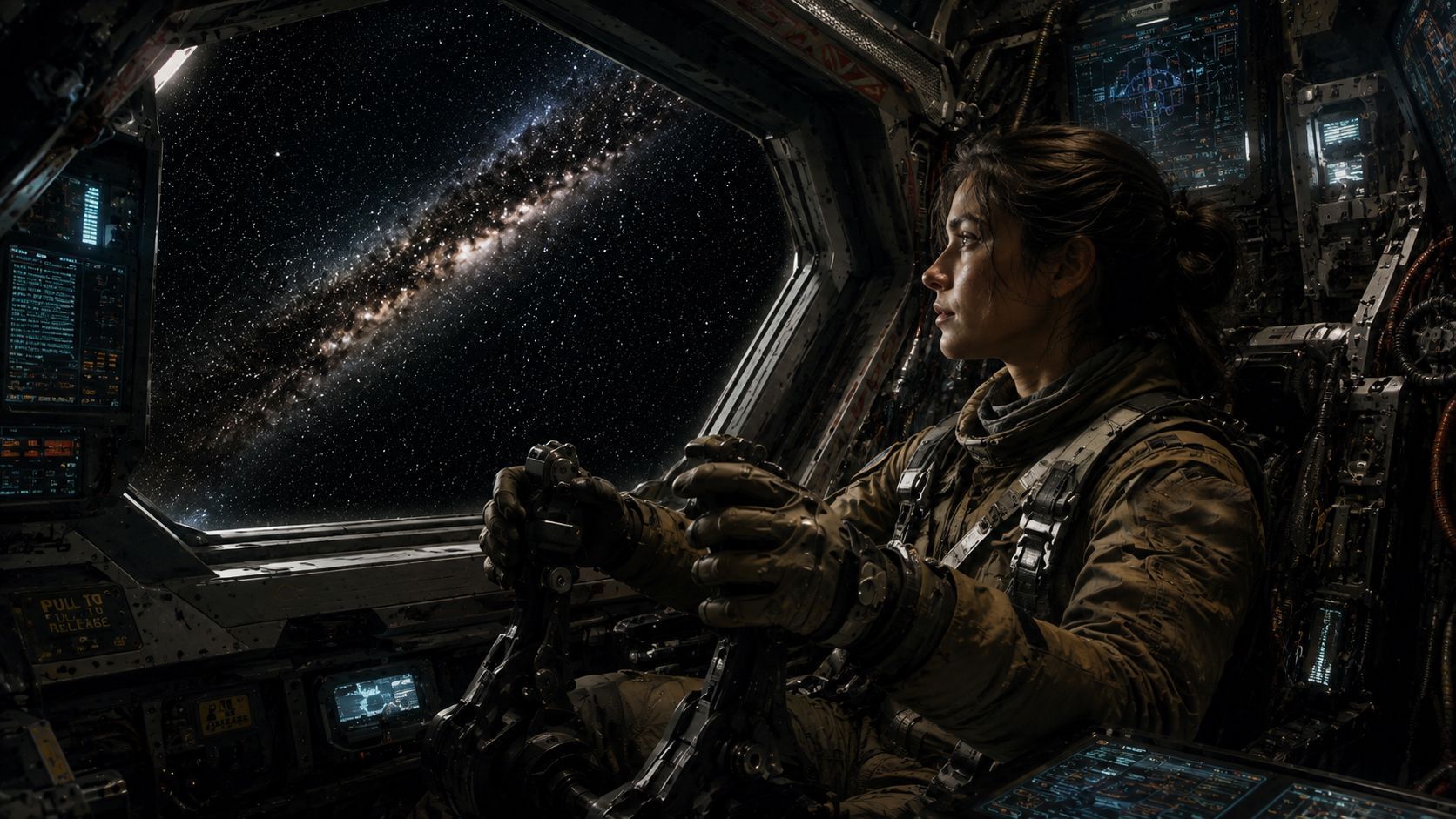
The image is powerful because it forces us to accept something difficult: even the most rigorous systems can be incomplete. And above all, because it introduces a deeply human and universal experience—knowing that something does not fit before we can prove it. That persistent sensation, hard to formalize yet impossible to ignore, is what we continue to call intuition.
Behind that metaphor stood James Clerk Maxwell, one of the great scientists in history. Scottish, born in Edinburgh and educated there before later studying in Cambridge, Maxwell was neither an eccentric visionary nor a mystic disguised as a physicist. He was methodical, rigorous, and deeply rational. And yet, much of his work began not with equations, but with mental images, analogies, and a persistent inner conviction. Something about the way electricity, magnetism, and light were being studied struck him as conceptually insufficient.
In the second half of the nineteenth century, these phenomena were treated as separate realities. The approach worked and produced results, but it did not convince Maxwell. He sensed that this separation was an intellectual convenience, not a faithful description of reality. He did not yet have all the evidence or the definitive mathematical language, but he had something prior: the certainty that he was observing fragments of a single phenomenon.
That intuition was the true starting point. Before formulating the equations that would unify electricity, magnetism, and light, Maxwell spent years exploring visual and mechanical models. He was not speaking of magic or supernatural inspiration, but of the need to translate internal evidence into verifiable knowledge. The proof would come later. The first step was not to betray that initial perception.
His work was not an academic curiosity or an isolated theoretical exercise. It transformed our understanding of some of the most fundamental phenomena of nature and laid the foundations for much of the technology we rely on today. Without Maxwell’s ideas, modern telecommunications, radio, radar, satellites, the internet, and the digital world as we know it would not exist. A significant part of the invisible infrastructure that sustains everyday life rests, directly or indirectly, on that initial intuition that refused to accept an incomplete explanation.
It was in this context that the image later known as “Maxwell’s demon” emerged—although the term was not his and never particularly pleased him. In reality, Maxwell spoke of a “finite being”: a limited, non-omniscient entity that simply had access to information the theoretical model did not account for. The metaphor was not intended to violate physical laws, but to reveal something far more subtle: every explanatory system has blind spots.
More than a century later, Albert Einstein would acknowledge that Maxwell’s work had permanently changed the way we think about reality. His own theory of relativity would not have been possible without that prior step. Maxwell died in 1879, the same year Einstein was born. There is no need to load this coincidence with mysticism, but it can be understood for what it is: an intellectual continuity, a deep intuition that is transmitted and transformed. From a Jungian perspective, Carl Jung might have spoken of synchronicity—not as magical causality, but as a meaningful coincidence revealing how certain ideas seem to emerge when the time is ready for them.
This pattern repeats itself constantly. Major advances do not begin with clear answers, but with the sense that something does not quite fit. That sensation is not yet a theory, but neither is it an arbitrary hunch. It is a preliminary form of orientation, a compass pointing in a direction before any map exists.
For decades, intuition was viewed with suspicion, especially in professional environments. It was associated with impulsiveness, subjectivity, or lack of rigor. Contemporary research, however, has painted a very different picture. Daniel Kahneman distinguished between a fast, automatic, intuitive system and a slow, analytical, deliberative one. Intuition is not the opposite of reason; it is a different mode of processing.
Herbert A. Simon put it succinctly: expert judgment is not magic, but well-organized memory. We recognize patterns because we have accumulated experience, even if we cannot always explain each step of the reasoning process. This idea was explored empirically by Gary Klein, who studied real-world decisions under extreme pressure. Firefighters, pilots, or emergency teams do not compare options when time is scarce; they recognize familiar configurations and act. That is expert intuition.
It is not only about speed, but about adaptation. Gerd Gigerenzer showed that in contexts of uncertainty and incomplete information, simple heuristics can outperform complex analyses based on poor data. Intuition functions as a pragmatic strategy when environments are ambiguous and constantly changing.
Neuroscience adds another layer. Today we know that the brain is not a passive receiver of stimuli, but a predictive system. Karl Friston proposed that the brain continuously generates models of the world to reduce uncertainty. Perception is not registration, but anticipation. From this perspective, intuition can be understood as the conscious trace of a predictive process operating in the background.
This process does not occur only in the abstract mind. The whole body participates. Antonio Damasio showed that decisions rely on somatic markers—bodily signals linked to past experiences that guide action before conscious reasoning intervenes. That is why we sometimes feel that something “doesn’t fit” physically before we can put it into words. This is not irrationality; it is embodied memory.
The same tension between what can be explained and what remains outside our models reappears in contemporary culture. In Ghost in the Shell, the central question is not whether a machine works, but what remains when everything seems explained in terms of code and hardware. Where is that “something” that cannot be reduced to rules or algorithms? The question is modern, but the problem is the same one Maxwell already faced: the limits of our models in the face of real complexity.
In an accelerated world, saturated with information and shaped by uncertainty, intuition regains a central role. It does not replace analysis, but guides attention when data is insufficient or arrives too late. It works as a compass, not as a map. It does not offer the full route, but it points toward a meaningful direction.
It is important to say this clearly: intuition does not guarantee correctness. It can be distorted by biases, poorly regulated emotions, or lack of experience. That is why it requires contrast, review, and dialogue with rational thought. Mature practice does not consist in choosing between intuition and reason, but in learning to integrate them consciously.
It is no coincidence that this is the starting point. Before speaking about purpose, action, or meaning, we must understand how we orient ourselves when we do not have all the answers. Maxwell did not begin with absolute certainty. He began with a deep intuition and the discipline not to ignore it. In a world where we rarely have complete maps, learning to read the inner compass well is not an intellectual luxury, but a vital necessity.